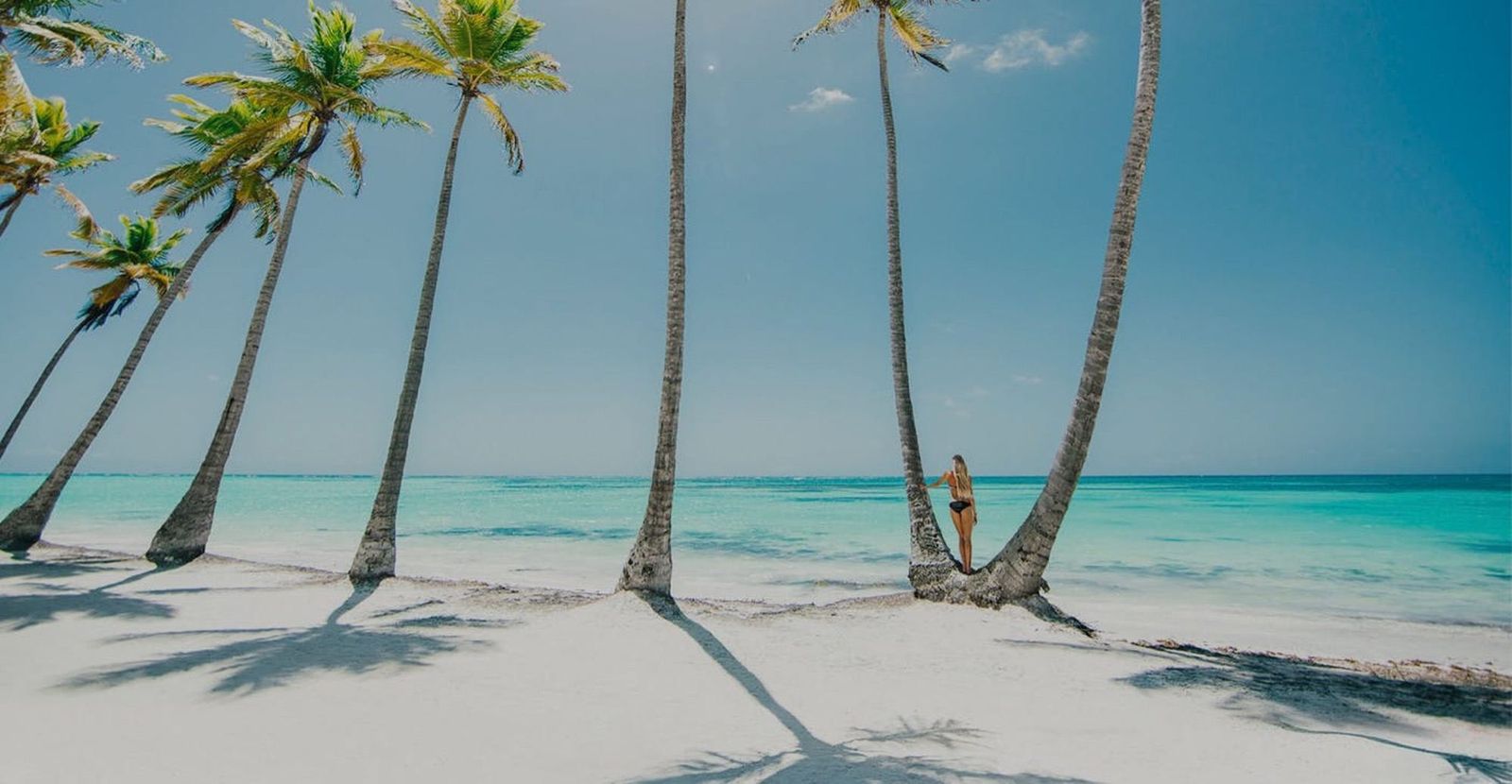
What to do in Punta Cana and how to plan your trip
Fifty kilometres of palm-backed beach and the densest concentration of all-inclusive resorts in the Caribbean. The resorts look alike from the brochure — the stretch of coast they sit on does not.
- 2transportation zones
- 112hotels
- 50 kmof beach
- 26 °Csea, year round
- UTC−4no daylight saving

Everything you need to know about Punta Cana
Punta Cana was jungle and coconut plantation until an investor bought a stretch of coast in 1969 and built an airstrip. Today the same coast holds more all-inclusive rooms than anywhere else in the Caribbean, strung along the fifty kilometres of white sand the tourist ministry counts from Cap Cana in the south to Uvero Alto in the north. There is no town in the usual sense — the resorts are the settlements — and the difference between a good vacation and an awkward one is usually which zone you booked, not which brand. What sits behind the beach is the part most people miss: freshwater lagoons, a blue sinkhole in the jungle, and a national park of mangroves and caves an hour up the coast.

Getting to Punta Cana
- Punta Cana International AirportThe best-connected airport in the Caribbean, with thatched-roof terminals and direct flights from twenty-six countries. Twenty minutes to Bavaro, forty-five to Uvero Alto.
- The Coral HighwayOfficially the Oscar de la Renta Highway: under an hour west to La Romana and its beaches, and about two and a half hours to Santo Domingo and the Colonial City.
- Marina Cap CanaSmall luxury cruise ships have called here since 2017. Larger ships use La Romana, an hour and a half west, which is also the gateway to Bayahibe and Saona.
Beyond the beach
What there is to do once you leave the resort, which most people do at least once.


Good to know
- LanguageSpanish. English is standard in the resorts, and French and German are common in the bigger ones.
- CurrencyDominican peso (DOP). US dollars and euros are accepted everywhere in the resort zone, at a rate that favours the resort.
- Time zoneUTC−4 all year, with no daylight saving. One hour ahead of Toronto and Montreal in winter and the same in summer.
- Power110 V, 60 Hz and the same flat plugs as in Canada: no adapter needed.
- WaterBottled water. Resorts supply it; outside them, buy it rather than trust the tap.
- Emergencies911 nationwide, and it works. Resorts also have their own on-site medical staff.
Transfers from the airport to every zone of Punta Cana are a fixed price per vehicle, with the driver waiting at the exit. See availability.
What to see and do in Punta Cana
The full list, not a top three: what the tourist board of the destination puts first.
The main resort stretch and the one the ministry leads with: wide sand, beachfront hotels and the calmest water of the fifty kilometres.
The wild one, with surf and no hotel behind it. The board lists it as the natural setting of the coast.
Inside Cap Cana, the calm turquoise end. Shallow and sheltered, with beach clubs rather than resorts.
Where to go for crafts and a beachfront that still belongs to the town rather than to a hotel.
The catamaran day everyone does, inside Cotubanama national park, with a natural pool that is a sandbar in open water.
The other island, and the one for snorkelling and diving: clearer water and a wall that drops off close to shore.
A twenty-metre turquoise sinkhole at the foot of a cliff inside Scape Park, at Cap Cana. The walk in through the jungle is part of it.
Freshwater lagoons under the trees, a few minutes from the resorts, and the quietest thing on this coast.
Mangroves, caves and rock islands an hour up the coast. Boat access only, and the most different day you can have from the beach.
A hill with panoramic swings over the lagoon and the sea, reached by a rough track that the tours do in four-wheel drive.
Through the countryside and the villages behind the coast, which is where you see what the rest of the province looks like.
The replica Mediterranean village above the Chavon river, an hour and a half west, with its five-thousand-seat amphitheatre.
The nightlife the ministry lists first: a show with acrobats and live music rather than a club.
Beaches of Punta Cana
North to south along the coast, and what changes between them.
The long central stretch: white sand, coconut palms, reef offshore and most of the big resorts. Calm and shallow.
A quieter pocket between Bavaro and the airport, with a lagoon behind and fewer people on the sand.
In Cap Cana, to the south. Groomed, sheltered and the most exclusive stretch of the coast.
Open Atlantic, with surf and no resort behind it. Spectacular, and not a calm swimming beach.
Forty-five minutes north, where the coast is wilder, the waves bigger and the resorts far apart.
When to visit Punta Cana
Four seasons for one destination. Pick yours by weather, crowds and price.
The dry season and the peak: 25 to 30 °C, trade winds, and resorts at full occupancy. Book transfers and excursions ahead.
Warm, with short showers and noticeably lower rates. Sargassum can appear on the east-facing beaches.
Hot and humid, with the sea at its warmest. Family season, and the start of the hurricane window.
The quietest and cheapest, and the months to watch the tropical forecast. Late November is the sweet spot.
Getting around Punta Cana
What each option costs and when it makes sense.
Most hotels run their own carts and shuttles inside the grounds, which in the larger ones is genuinely necessary.
Fixed fares by route, posted at hotel receptions and expensive for the distance. Agree the price before setting off.
Local minibuses run the main road between Bavaro and Higuey for very little. Cash, crowded and not made for luggage.
Airport to resort at a fixed price per vehicle, with the driver meeting you past the arrivals hall — the only way to know the cost before you land.
Areas of Punta Cana we serve
2 zones along the coast, each with its own hotels, its own drive from the airport and its own fixed price.


Hotels in Punta Cana we pick up from
Fixed price to every hotel in the zone. If yours is not here, type it in the search box.

Bavaro
Punta Cana · 87 hotels- Free cancellation with Premium
- Flight monitoring
- Meet & greet
Tips from our local team in Punta Cana
What travellers ask us most, answered by the people who live here.
The zone matters more than the brand
Bavaro is central and busy, Cap Cana is polished and quiet, Uvero Alto is remote and beautiful but forty-five minutes from everything. Read the address, not the star rating.
Pay in pesos where you can
Resorts and shops quote in US dollars and set their own rate. Cards in pesos, or pesos in cash, consistently come out cheaper.
Sargassum is an east-coast problem
It appears mostly between May and August and varies week to week. Resorts clean their beach at dawn; the sheltered southern stretches usually catch less.
Excursions cost less outside the hotel desk
The same Saona catamaran sells for noticeably less booked directly than through the lobby. Check the operator, not just the price.
The airport exit is a market
Between the arrivals door and the parking lot you will be offered taxis, tours and "upgrades". Your booked driver is holding a sign past all of it.
Tip in small notes
Service is included in all-inclusive rates, but small tips in pesos or US one-dollar bills are customary and genuinely appreciated.
Punta Cana travel guides
Practical, written by the team that drives the area every day.

Punta Cana: one airport, thirty kilometers of very different coast
Punta Cana is not a town. It is the eastern tip of the Dominican Republic, with an airport in the middle and resorts strung along a coast that runs nort…
3 readBávaro is the beach people mean when they say Punta Cana
Playa Bávaro runs for kilometers: wide, white, lined with coconut palms, with a reef offshore that keeps the water calm. It is the reason the Dominican …
3 readGetting to Punta Cana from the airport
Fixed price per vehicle to every zone, driver at the exit with your name. Full details on the airport page.
Transportation prices per zone in Punta Cana
| Transportation zone | Drive time | Passenger van8 8 | See availability |
|---|---|---|---|
| Bavaro | 25 min | US$50 | See availability |
| Uvero Alto | 60 min | US$79 | See availability |
One way in USD per vehicle, taxes, tolls and luggage included. Round trip is the total for both legs. Drive times are estimates without traffic, calculated from distance and speed limits; those marked ≈ are approximate.