What to do in Miami and how to plan your trip
A Latin American city with an American passport: Art Deco on the sand, Cuban coffee on Calle Ocho, murals in Wynwood, and the Everglades an hour west of the skyline.
- 24 kmof city beach
- 70%speak Spanish at home
- UTC−5Eastern time, with DST

Everything you need to know about Miami
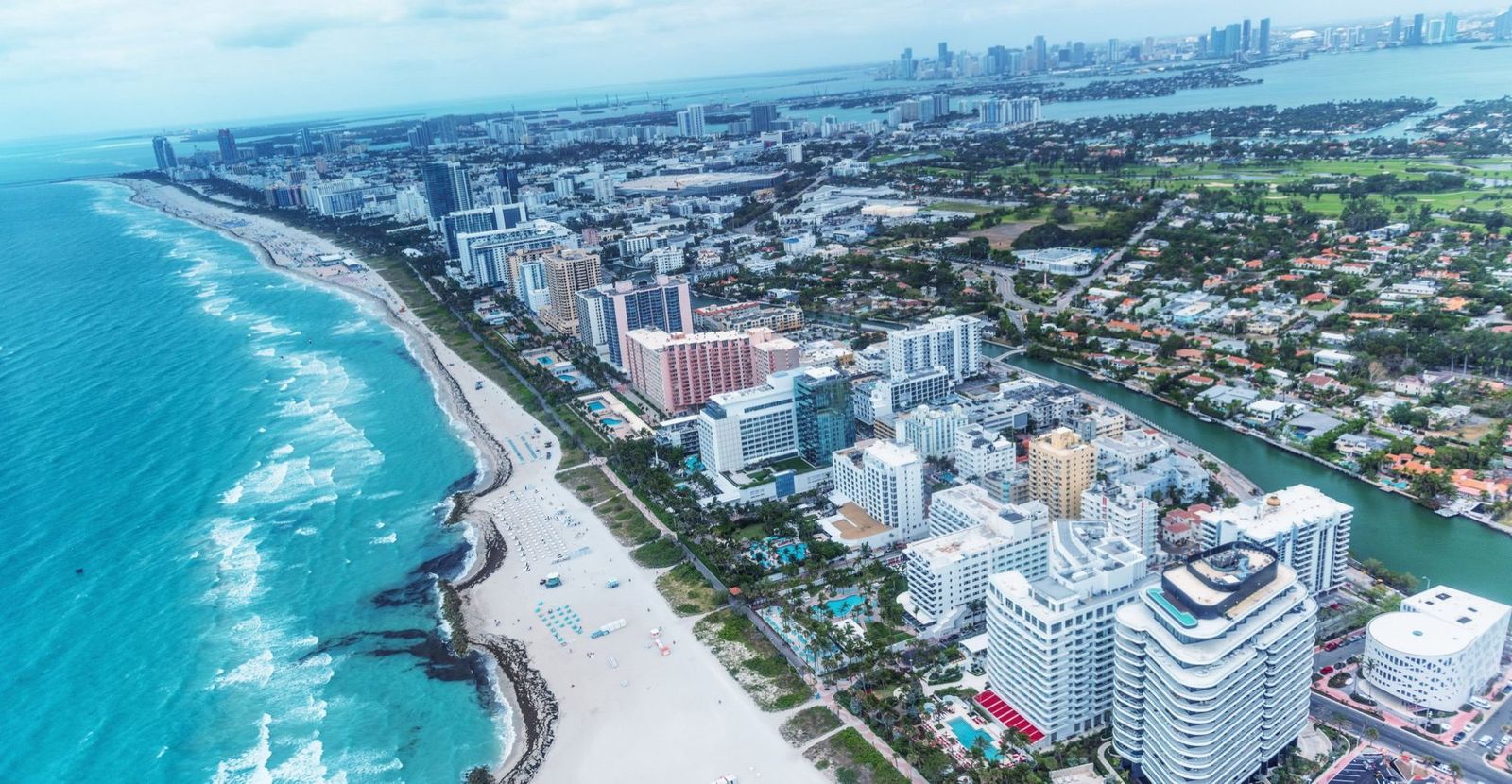
What the visitors bureau calls Greater Miami & Miami Beach is two cities separated by a bay. Miami Beach is the island: Ocean Drive, the largest concentration of Art Deco buildings anywhere, and twenty-four kilometres of sand running north from South Pointe through Mid Beach to North Beach. The mainland is the actual city — Brickell’s towers, Wynwood’s murals, the Design District’s storefronts, Little Havana’s cafés, Coconut Grove’s trees, Coral Gables with its Venetian Pool and Miracle Mile — and it is where most people live and eat. Then there is the part almost no one books: Biscayne National Park, ninety-five per cent of it underwater and sitting on the only living coral barrier reef in the United States, with the Everglades an hour west and the Keys an hour south. The mistake most visitors make is booking a week and never leaving one island.

Getting to Miami
- Miami International (MIA)Thirteen kilometres west of downtown and about twenty-five minutes from South Beach without traffic. One of the busiest international gateways in the Americas.
- Fort Lauderdale (FLL)Forty-five kilometres north, often cheaper and a common arrival for low-cost and Caribbean routes.
- PortMiamiThe largest cruise port in the world, on an island beside downtown, with a bridge to both the city and the beach.
Beyond the beach
The Art Deco strip, the reef and the swamp: three Miamis that are not the sand.


Good to know
- LanguageEnglish and Spanish, genuinely both. In much of the city Spanish is the default language of service.
- CurrencyUS dollar. Cards everywhere; tipping is expected and often added automatically for groups.
- Time zoneUTC−5, Eastern time, and Florida does observe daylight saving.
- Power120 V, 60 Hz, the same flat plugs as in Canada.
- WaterTap water is safe to drink throughout the city.
- Emergencies911. Lifeguards on the main beaches fly warning flags — check them before swimming.
What to see and do in Miami
The full list, not a top three: what the tourist board of the destination puts first.
Around eight hundred buildings from the thirties, protected as a historic district. Ocean Drive is the postcard; Espanola Way and Lincoln Road are where you actually spend the afternoon.
A warehouse district turned open-air gallery, with breweries, galleries and the best coffee in the city. One of the few parts of Miami you walk rather than drive.
Ten minutes north of Wynwood and the opposite register: flagship stores, public art and Michelin kitchens.
Cuban coffee windows, domino players in Maximo Gomez Park and cigar rollers working in storefronts. Busiest on the last Friday of the month.
An Italianate villa on Biscayne Bay in Coconut Grove, with formal gardens running down to the water.
The City Beautiful: Miracle Mile, the Biltmore Hotel and the Venetian Pool, a public pool carved out of a coral quarry in 1923.
Both on the same bayfront campus downtown, and the easiest culture to combine with Brickell.
Ninety-five per cent of it underwater, on the only living coral barrier reef in the United States. Boat trips and snorkelling leave from Homestead.
An hour west: sawgrass, alligators and the largest subtropical wilderness in the country, with airboats at the edges and walking trails inside.
A causeway from downtown to a barrier island with a lighthouse from 1825 and the calmest beach close to the city.
The Little Haiti Cultural Complex and the Caribbean Marketplace; the Lyric Theater and Red Rooster in Overtown, the heart of Black Miami.
Over 280 county parks, with kayaking and mountain biking at Oleta River State Park in North Miami.
Aventura Mall, Bal Harbour Shops, Brickell City Centre and Dadeland, plus Lincoln Road for the outdoor version.
The overseas highway starts an hour south and runs a hundred and eighty kilometres to Key West over forty-two bridges.
Beaches of Miami
From the crowded middle of South Beach to the quiet sand nobody photographs.
From South Pointe to about 15th Street: the busiest sand in Florida, lifeguard towers, and the Art Deco strip behind it.
From 20th to 60th Street. Wider, calmer, with the boardwalk running behind it and far fewer people.
North of Bal Harbour, backed by a park rather than hotels. Also Florida’s best-known clothing-optional beach, clearly signposted.
Across the causeway, with Crandon Park and Bill Baggs at the tip. Calm, shallow and where families from the city go.
Between downtown and Key Biscayne. Quiet, shaded and almost never crowded.
When to visit Miami
Four seasons for one destination. Pick yours by weather, crowds and price.
The dry season and the high one: 20 to 27 °C, low humidity and every hotel full. The reason the city exists as a destination.
Hot and humid, with afternoon thunderstorms starting. Rates drop and the sea warms up.
Above 32 °C with high humidity, daily storms and the peak of hurricane season. The cheapest months by a distance.
The rain eases, the humidity drops and the crowds have not returned. The best-value weeks of the year.
Getting around Miami
The city is spread out and the beach is on an island. What each option costs.
The default way to move. The city is spread out, parking is expensive and metered almost everywhere.
Free in the downtown and Brickell loop and genuinely useful there. They do not reach the beach.
Necessary for the Everglades or the Keys, and a burden inside Miami Beach, where hotel parking is charged nightly.
Airport to hotel at a fixed price per vehicle, which after a long-haul flight beats the rideshare lineup at MIA.
Tips from our local team in Miami
What travellers ask us most, answered by the people who live here.
The beach and the city are different places
Miami Beach is an island connected by causeways. Crossing in rush hour takes far longer than the map suggests — plan dinner accordingly.
Read the bill before you tip again
Many restaurants on Ocean Drive add an automatic service charge of 18 to 20 per cent. Tipping again on top is a common and expensive mistake.
Parking on the beach is a tax
Hotels charge nightly for parking and street meters are enforced hard. If you are staying on the beach, a car is usually a cost with no benefit.
Check the flags before swimming
Purple means marine life, red means dangerous surf, double red means closed. Rip currents here are real and lifeguards use the flags for a reason.
The Everglades are an hour away, not a day
Shark Valley and the airboat operators on the Tamiami Trail are an easy half-day from the city.
Eat away from Ocean Drive
A block or two inland, or in Little Havana and Wynwood, the same money buys noticeably better food.
Miami travel guides
Practical, written by the team that drives the area every day.

Miami Beach: one island, three completely different ends
Miami Beach is a barrier island about eleven kilometers long, separated from Miami by a bay and joined to it by causeways. South Beach is the loud, famo…
2 readMiami and Miami Beach are two cities, and the bay between them is the point
Miami is on the mainland: a downtown of towers, Brickell’s banks, Wynwood’s murals, Little Havana’s cafeterias and Coral Gables’ boulevards. Miami Beach…
3 read