What to do in Puerto Plata and how to plan your trip
The Dominican north coast: a Victorian port town with a mountain behind it, a cable car to the top of it, and thirty kilometres east the best windsurfing water in the Caribbean.
- 1transportation zone
- 24hotels
- 793 mMount Isabel de Torres
- 26 °Csea, year round
- UTC−4no daylight saving

Everything you need to know about Puerto Plata
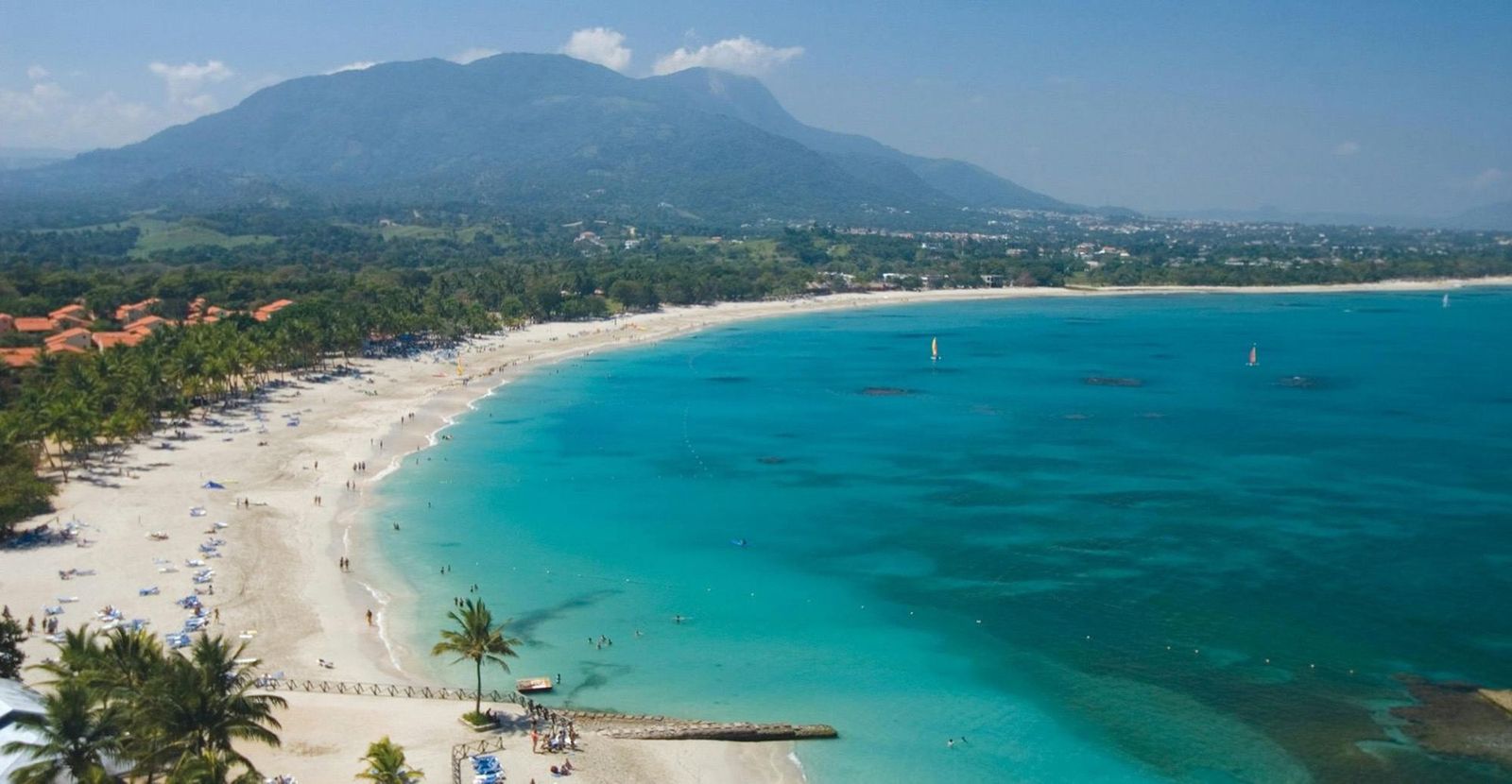
Puerto Plata is the oldest resort area in the Dominican Republic and the only one with a real town attached: a grid of Victorian gingerbread houses around Independence Square, the Cathedral of St Philip the Apostle on one side, the sixteenth-century San Felipe fortress out on the point, and an amber museum that explains why this stretch of the north coast is the best source of amber on earth. Behind it Mount Isabel de Torres rises almost eight hundred metres, with the only cable car in the Caribbean running to the statue on top. East along the coast the character changes fast — Sosua is a sheltered bay with a diving scene, and Cabarete, twenty minutes further, is a kitesurfing town that runs on wind.

Getting to Puerto Plata
- Puerto Plata Airport (POP)Eighteen kilometres east of the town, between Sosua and the centre, with direct flights from North America and seasonal charters from Europe.
- From Santiago and Santo DomingoSantiago is about an hour and a quarter over the mountain; the capital is around four hours by the Duarte highway.
- Amber Cove and Taino BayTwo cruise terminals near the town, which is why the Malecon and the cable car are busiest at midday.
Beyond the beach
Three things you will not find on the other coast.


Good to know
- LanguageSpanish, with English in the resorts and a noticeable German and Canadian community in Sosua and Cabarete.
- CurrencyDominican peso (DOP). US dollars and euros are taken in tourist areas at the seller’s rate.
- Time zoneUTC−4 all year, with no daylight saving.
- Power110 V, 60 Hz, the same flat plugs as in Canada.
- WaterBottled water. Resorts supply it; buy it elsewhere rather than drink from the tap.
- Emergencies911 nationwide. Puerto Plata and Sosua both have private clinics used to treating visitors.
Transfers from the airport to every zone of Puerto Plata are a fixed price per vehicle, with the driver waiting at the exit. See availability.
What to see and do in Puerto Plata
The full list, not a top three: what the tourist board of the destination puts first.
The only aerial tramway in the Caribbean, up to a statue of Christ, a botanical garden and the view over the whole bay. Go early, before the cloud settles.
A sixteenth-century stronghold on the point, turned museum, looking straight out at the Atlantic.
Why this stretch of coast matters: the best amber on earth comes out of the hills behind the town, and the museum explains how.
The centre, with its Victorian gingerbread houses and the cathedral of St Philip the Apostle on one side.
A canyon of limestone pools you climb, jump and slide down with a guide, forty minutes inland.
The resort beach, sheltered and with everything within walking distance of the hotels.
Kilometres of seafront promenade, which is where the town actually goes in the evening.
A sandbank on the reef west of town, reached by boat, with water shallow enough to stand in far from shore.
The painted lanes between the fortress and the amber museum, and the most photographed corner of the centre.
The marine and entertainment park, for a day with children that does not depend on the weather.
Twenty minutes east, a beach town built entirely around the afternoon wind: lessons in the morning, serious kitesurfing from one.
What the ministry pushes hardest here: family cacao and coffee plantations, learning merengue from the people who play it, and the Bartolo Colon stadium and museum.
Beaches of the Amber Coast
Calm bays, surf breaks and the windiest water in the country, all within half an hour.
The resort beach east of town: calm, groomed and lined with hotels and a golf course behind.
A sheltered horseshoe bay with clear water, reef at both ends and a row of restaurants on the sand. The best swimming on this coast.
Long, open and windy. Flat in the morning, and from early afternoon the water fills with kites.
The surf beach west of Cabarete, with several breaks and surf schools on the sand.
An hour east, a wide golden beach backed by cliffs and almost no development. Strong surf, spectacular.
When to visit Puerto Plata
Four seasons for one destination. Pick yours by weather, crowds and price.
The dry, breezy high season: 25 to 29 °C and the busiest months. Good for everything except flat water.
Warm and green, with short showers. June to September is the strongest wind, which is why Cabarete fills then.
Hot, humid and the peak of the hurricane window. Rates drop accordingly.
The rains tail off and the crowds have gone. Watch the tropical forecast, but the coast is at its greenest.
Getting around the north coast
One coastal road links everything. What each way of using it costs.
Local minibuses run the coast road between Puerto Plata, Sosua and Cabarete constantly, for very little. Cash and crowded.
Motorcycle taxis, everywhere, cheap and without helmets. Useful for short hops, and a genuine risk on the main road.
Fixed fares by route, posted at hotels. More expensive than you expect for the distances involved.
Airport to hotel anywhere along the coast at a fixed price per vehicle, with the driver waiting at arrivals.
Areas of Puerto Plata we serve
1 transportation zones, each with its own page: hotels, times and fixed transfer prices from the airport.

Hotels in Puerto Plata we pick up from
Fixed price to every hotel in the zone. If yours is not here, type it in the search box.

Puerto Plata
Puerto Plata · 24 hotels- Free cancellation with Premium
- Flight monitoring
- Meet & greet
Tips from our local team in Puerto Plata
What travellers ask us most, answered by the people who live here.
Take the cable car before ten
Mount Isabel de Torres makes its own cloud. By midday the summit is usually inside it and the view is gone.
Sosua and Cabarete are not the same place
Twenty minutes apart and completely different: Sosua is a sheltered swimming bay with a nightlife reputation, Cabarete is a wind-sports town that goes to bed early and gets up for the breeze.
The wind is an afternoon thing
On this coast the thermal wind builds from about one o’clock. Swim in the morning, kite after lunch — that is the rhythm everything here runs on.
Damajagua sells two versions
You can climb seven pools or all twenty-seven. The full trip takes most of a day and involves jumps you cannot walk back from — pick honestly.
Motoconchos are the local risk
They are the cheapest way to move and the most common cause of vacation injuries here. For anything beyond a few blocks, take a car.
The north coast has waves
This is the Atlantic, not the Caribbean. Several beaches have real surf and undertow, and only the sheltered bays are calm swimming.
Puerto Plata travel guides
Practical, written by the team that drives the area every day.

Getting to Puerto Plata from the airport
Fixed price per vehicle to every zone, driver at the exit with your name. Full details on the airport page.
Transportation prices per zone in Puerto Plata
| Transportation zone | Drive time | Passenger van8 8 | See availability |
|---|---|---|---|
| Puerto Plata | 30 min | US$45 | See availability |
One way in USD per vehicle, taxes, tolls and luggage included. Round trip is the total for both legs. Drive times are estimates without traffic, calculated from distance and speed limits; those marked ≈ are approximate.