Tulum on a budget, starting with an honest look at the prices
Tulum is the most expensive place in Quintana Roo relative to what you get, and pretending otherwise helps nobody. The good news is that the expensive version and the reasonable version are geographically separate: one is a ten-kilometer strip of road along the coast, the other is the town behind it, and you choose which trip you are taking when you book the room.
There are two Tulums and they have different prices
The beach road — the one in the photographs, with the boutique hotels and the wooden signage — runs south from the ruins along the coast. Most of it has no mains electricity in the conventional sense, no supermarket, and restaurants priced in dollars. A coffee there can cost what a full meal costs a kilometer and a half inland.
Tulum town sits on Highway 307. It has supermarkets, taquerías, pharmacies, an ADO terminal, bicycle rental and prices that are recognisably Mexican. It is not pretty in the way the beach road is pretty. It is where the budget version of this trip happens.
The daily gap is what gets people
Staying in town and going to the beach every day means two taxi fares a day, and Tulum taxi fares between town and the beach road are notoriously high and negotiated rather than metered. Agree the price before getting in, every time, and ask the hotel what the going rate is so you know when you are being quoted a tourist number.
A bicycle changes this completely. The road is flat, the distance is manageable, and daily rental costs less than a single return taxi. It is the standard local answer and it is the reason you see so many bicycles in town. Ride in daylight — the beach road has no lighting worth the name.
A free beach and a beach club are different products
Public access to the shoreline exists and costs nothing, but public access does not come with a lounger, a towel, a bathroom or somewhere to leave your bag. Playa Pescadores and the beaches at the north end are the usual free entries; check which are currently open, because access points change.
A beach club is a business, and most of them work on a minimum spend rather than an entry fee — you are not buying a day at the beach, you are committing to a restaurant bill. Ask what the minimum is, what it includes and whether it covers the lounger, before you sit down. Some of them are worth it. None of them should be a surprise.
The ruins are cheap; the extras around them are not
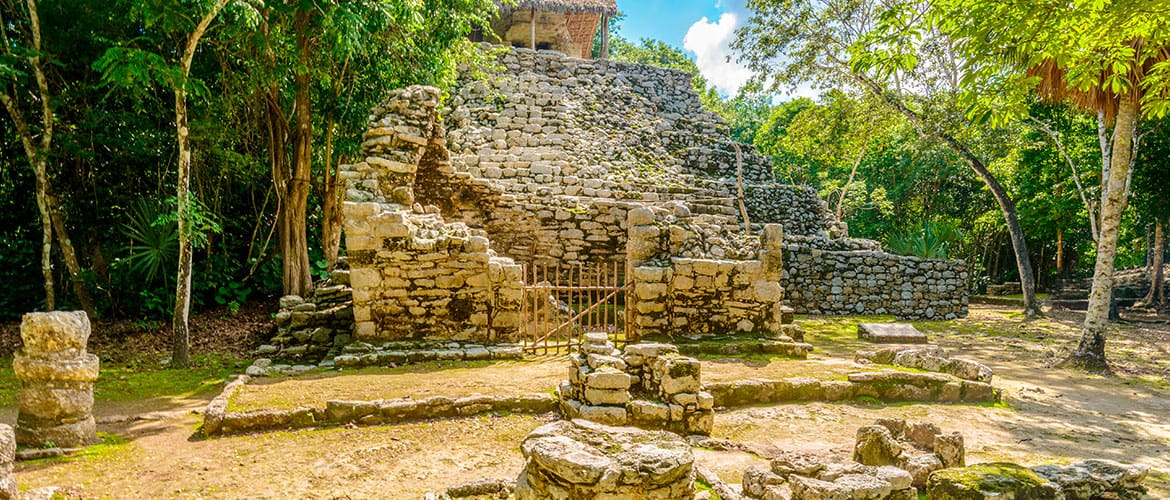
INAH currently lists the Tulum archaeological zone at 08:00 to 17:00 with last admission at 15:30, and the federal admission is modest. What surrounds it is where the cost appears: parking, the shuttle from the parking lot to the entrance, the guided tour, the state and municipal charges collected separately at the access. Ask what each one is as you pay it, rather than at the end.
You can walk in from the highway and you can skip the shuttle. A guide is genuinely useful here, but it is a choice, not a requirement, and the price is negotiable at the gate.
Where to eat without thinking about it
Two streets inland from anywhere touristed, in any town in Mexico, is the whole trick. In Tulum town that means the avenues off the main road, where a comida corrida — a set lunch of soup, a main and a drink — costs a fraction of a beach-road salad. Look for places full of people at two in the afternoon.
Buy water in the large refillable garrafones rather than in small bottles, and check whether the room actually has a fridge before planning around one. Many of the cheaper places do not.
Getting there without overpaying
Tulum is reached from Cancún Airport, about two hours south, and from Tulum Airport, which is much closer and served by fewer routes. Compare the flight price plus the ground leg rather than the flight alone — a cheap flight into CUN plus a two-hour transfer is frequently more expensive overall than the direct option, and occasionally is not. Do the arithmetic both ways.
The ADO bus from Cancún Airport is the cheapest way south and ends at the terminal in Tulum town, which is fine if you are staying in town and a problem if you are staying on the beach road with luggage. For the door-to-door version, the Cancún–Tulum route has the current fare. The Tulum guide and the beach-road guide cover the difference between the two areas.
Traveler questions
Is Tulum town much cheaper than the beach road?
How much is a taxi from town to the beach road?
Are the beaches free?
What does the archaeological zone cost?
Which airport is cheaper?
Sources
- Instituto Nacional de Antropología e Historia, Tulumlugares.inah.gob.mx · checked 2026-09-25
- Consejo de Promoción Turística de Quintana Roo, Tulumcaribemexicano.travel · checked 2026-09-25
- Secretaría de Ecología y Medio Ambiente de Quintana Roo, sargazoqroo.gob.mx · checked 2026-09-25