The Cancun Hotel Zone, kilometer by kilometer
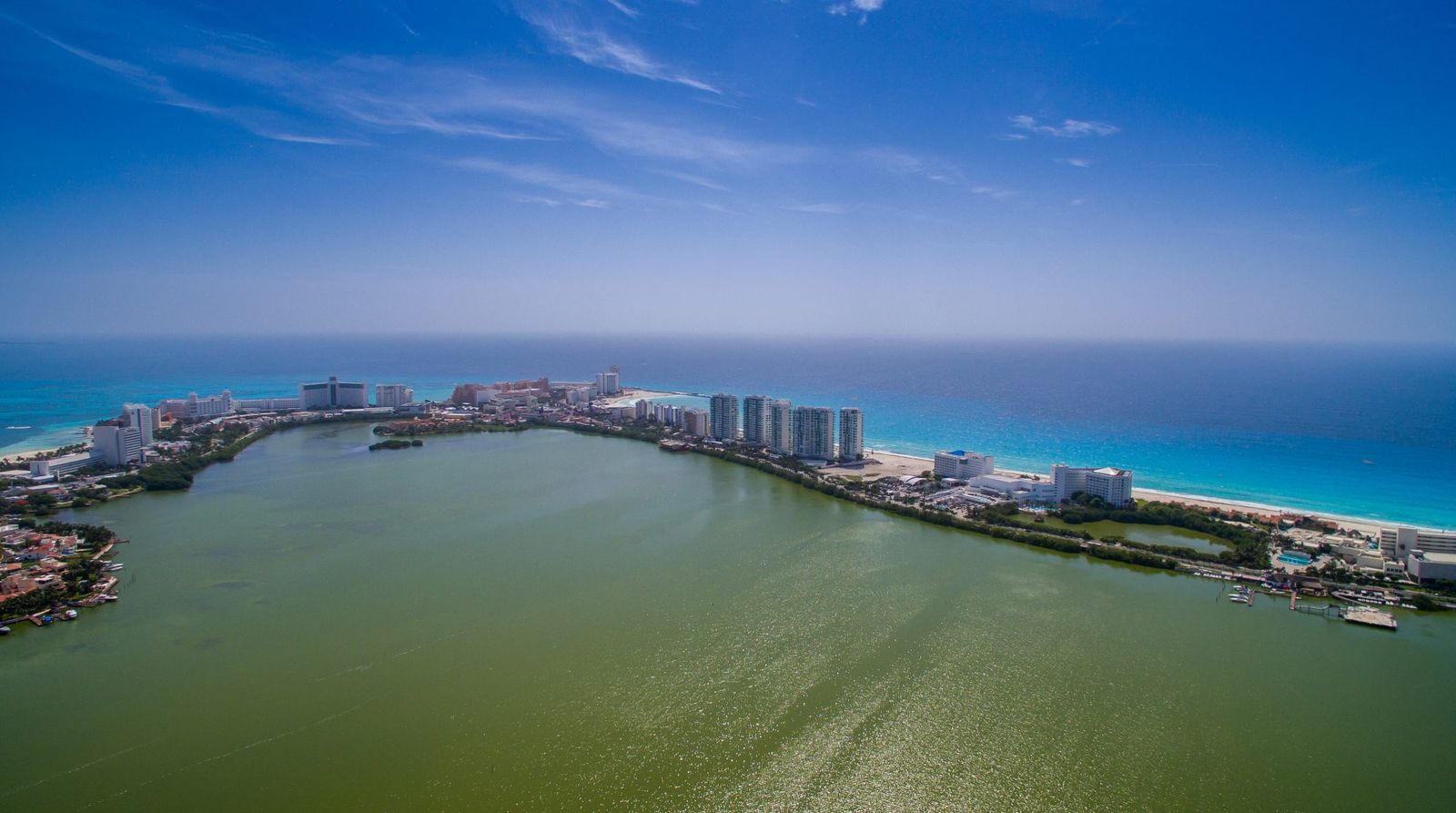
The Hotel Zone is a sandbar shaped like a number seven: 22 kilometers of boulevard with the Caribbean on one side and the Nichupté lagoon on the other, and a single road running the length of it. Everybody here navigates by the kilometer marker, and once you do too, the place stops being confusing — because where you are on that seven decides whether your sea is calm or rough, and whether anything is within walking distance.
The shape is the whole explanation
The short arm of the seven runs west to east along the top, facing north across the channel towards Isla Mujeres. That water is sheltered and almost always flat. At Punta Cancún, around km 9, the road turns south and the long arm runs down the open Caribbean coast, which has real surf and flies red flags regularly.
So "a beach in the Hotel Zone" means two completely different things depending on which arm you are on. If you are traveling with small children, this is the most useful paragraph on this page.
What is where
km 1–4
The city end. Playa Las Perlas, Playa Linda, the bridge, and the marinas where the boats leave from. Cheapest rooms on the strip, closest to downtown.
km 4–9
The sheltered north-facing stretch: Playa Langosta, Playa Tortugas, Playa Caracol. Calm shallow water and ferry piers for Isla Mujeres.
km 9–14
Punta Cancún and the bend. The malls, the nightclubs, Coco Bongo, and the highest concentration of everything. Where to stay if you want to walk somewhere at night.
km 14–20
The long open stretch: Playa Chac Mool, Playa Marlín, Playa Ballenas. Big resorts, wide beaches, open sea. Quiet, and you will take a bus or taxi for anything.
km 17–20
Playa Delfines, the Cancun sign, the viewpoint and the El Rey ruins. The far end, and the best free view on the strip.
Getting up and down
The R-1 and R-2 buses run the boulevard constantly, cost a few pesos, take cash, and are how the strip actually moves. They run late. There is no other public transport, and there are no sidewalks in long stretches.
Taxis here negotiate rather than meter, so agree the fare before the door closes; hotel ranks charge more than flagging one down. Uber works in the city, but not from the airport, where platforms hold no federal permit.
The beaches are all public
Every beach in Mexico is federal land up to the tide line, including the sand in front of any resort. What is private is the hotel’s path to it. Use the marked public accesses — they exist between the hotels and they are signposted, though not generously.
Read the flag, every time, and especially on the open stretch. Green and yellow are swimmable with attention, red is not, black means out. They change during the day.
Eating on the strip, honestly
The Hotel Zone is where Cancun is most expensive and least interesting to eat. There are good restaurants, mostly around Punta Cancún and in the malls, and they are priced accordingly. The actual food city is downtown, fifteen minutes and a bus ride away, and it is worth doing at least twice.
Keep planning
Cancun · Cancun Hotel Zone & Downtown · Cancun
Traveler questions
What do the kilometer markers mean in Cancun?
Which part of the Hotel Zone has calm water?
Can I walk between hotels?
Are the beaches private?
How do I get to downtown?
Sources
- Quintana Roo Tourism Board, Cancun and the 22-kilometer Hotel Zonecaribemexicano.travel · checked 2026-09-25