Ten things to do in Tulum, and how long each one really takes
Tulum spreads over four separate places that share one name: the town on the highway, the ruins on the cliff, the beach road along the coast, and the jungle inland with the cenotes in it. Almost every visitor underestimates how far apart they are, which is why itineraries here collapse. Here is what is worth doing and what it costs you in hours.
The ruins, first thing in the morning
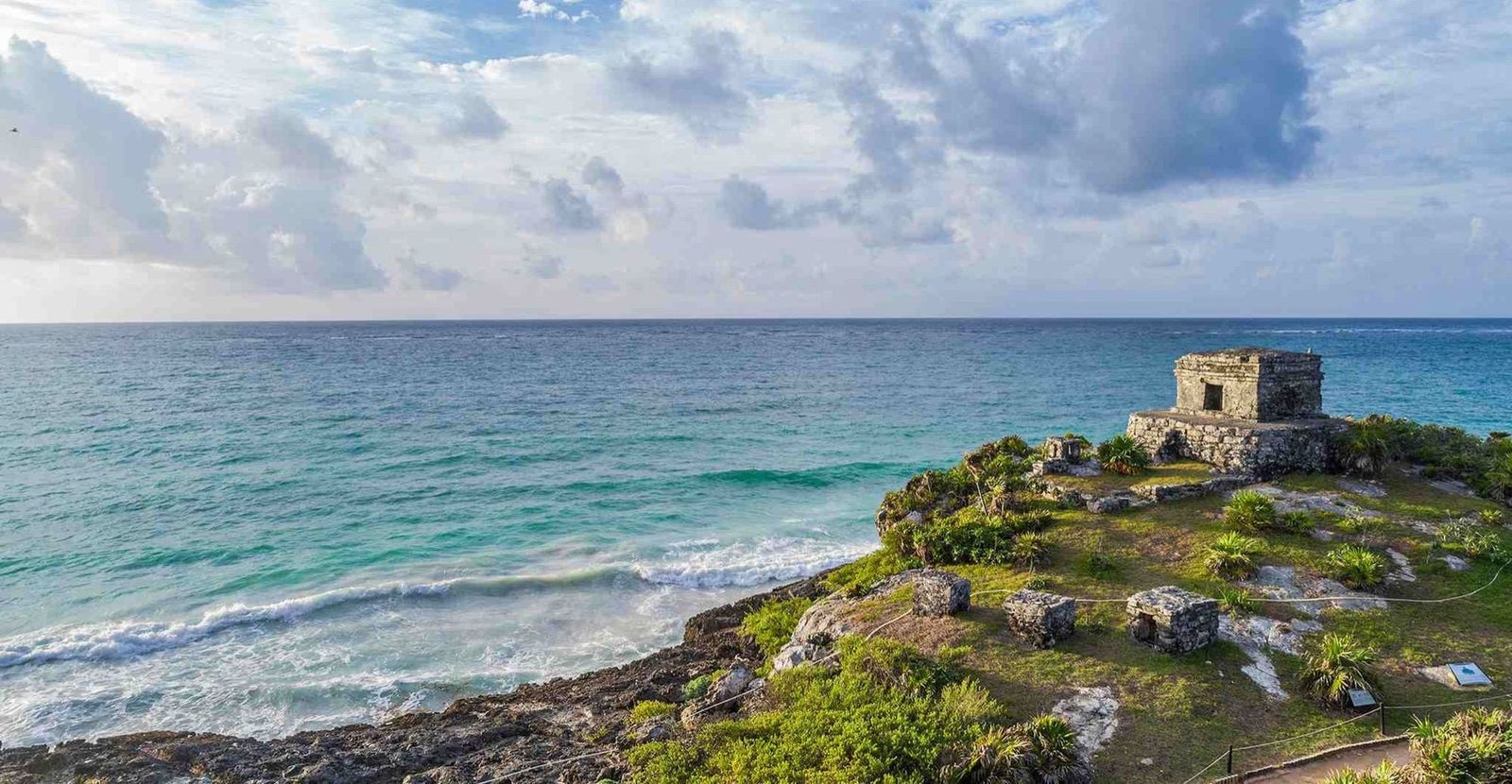
Tulum is the only major Maya site on the coast, and standing on the cliff above that water is the reason people come. It is also small — you will see it in ninety minutes — and almost entirely without shade.
INAH currently lists it at 08:00 to 17:00 with last admission at 15:30. Go at opening. By half past ten the buses from Cancún have arrived and the site is both crowded and hot, and by noon the pale stone is throwing heat back at you. The swimming beach below the ruins is often closed for conservation, so do not plan the morning around it.
The cenotes, which are the real reason to be here
This is the thing Tulum has that nowhere else does at this concentration. Gran Cenote and Cenote Calavera are minutes from town on the Cobá road; Dos Ojos and the larger systems are further north. They are separate businesses with separate prices, separate opening hours and separate rules, and the rule they all share is that you rinse off before entering and use no sunscreen.
Two or three in a morning is comfortable if they are on the same road. Trying to combine one near town with one near Akumal turns a swim into a driving day.
The beach road, in the right frame of mind
Ten kilometers of coast road with the hotels and beach clubs along it. The beach is genuinely beautiful and almost all access to it goes through a business, which is the part people are not told. Public entries exist — the northern stretch near the ruins — but most of the sand you see in photographs belongs to somewhere with a minimum spend.
Go with the price settled in advance and it is a lovely afternoon. Go expecting a public beach and it is an argument. Sargassum changes the picture entirely from one week to the next, so ask locally rather than trusting an image.
The town, which is where people actually live
Tulum town is a highway town and it is not pretty, but it has the restaurants, the supermarkets, the bicycle rental and the prices. Eating here costs a fraction of the beach road for food that is frequently better, and it is where you sort out anything practical. Give it an evening rather than treating it as somewhere to pass through.
Three trips worth leaving Tulum for
Cobá
Inland, about forty-five minutes. A much larger site than Tulum, set in jungle, with paths you cover by bicycle or in a pedal taxi. Quieter and, for most people, more memorable than the coastal ruins. A half-day.
Sian Ka’an
The biosphere reserve south of town. Entry is through authorised access points with authorised operators — this is not a place to drive into and look around. A full day, and the single best thing in the region if you care about what is actually here.
Akumal
North towards Playa del Carmen, known for turtles in the bay. Regulated: guides, life jackets, limited numbers, no sunscreen. Half a day, and check the current rules because they have tightened repeatedly.
Getting between all of it
A bicycle covers town, the ruins and the north end of the beach road, and is what most people here use. Anything further needs a taxi, a colectivo along the highway, or a car. Taxi fares in Tulum are negotiated rather than metered and are high by regional standards, so agree the price first and ask your accommodation what is normal.
For arrivals, compare Tulum Airport against the road from Cancún, and place your hotel using the Tulum guide or the beach-road guide — because that choice determines everything above.
Traveler questions
Are the ruins walkable from town?
What time is last admission at the ruins?
Can I swim at the beach below the ruins?
Which cenote should I choose?
Is Cobá worth the drive?
Sources
- INAH, zona arqueológica de Tulumlugares.inah.gob.mx · checked 2026-09-25
- Consejo de Promoción Turística de Quintana Roo, Tulumcaribemexicano.travel · checked 2026-09-25
- SEMA Quintana Roo, semáforo del sargazoqroo.gob.mx · checked 2026-09-25
- CONANP, áreas naturales protegidasconanp.gob.mx · checked 2026-09-25